
India on Tuesday banned exports and imports of all items from North Korea that can be used in nuclear or ballistic missile plans. The Commerce Ministry imposed a blanket ban on "all items, materials, equipment, goods and technologies which could contribute to the Democratic People's Republic of Korea's nuclear-related, ballistic missile-related and other weapons of mass destruction-related programmes".
The new UN Security Council resolution on nuclear non-proliferation and disarmament makes it difficult for the NPT signatory countries to withdraw from the regime and calls upon nations to enter into safeguard agreements with the International Atomic Energy Agency.
India had three exploratory meetings with IAEA on the main concepts that would be embedded in an India-Specific Safeguard Agreement
He said India will support diplomatic efforts in the run up to the IAEA meeting in March to reach an amicable solution.
IAEA director general Muhamad ElBaradei expressed the hope for a long-term comprehensive agreement, which would allow for the development of relations and cooperation with Iran.
Denying that India acted under US pressure in voting against on Iran's nuclear programme at IAEA, Defence Minister Pranab Mukherjee said New Delhi's stand gave more time for diplomacy.
India has said that it has difficulty with parts of the IAEA draft.
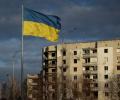
India has abstained in the UN General Assembly on a resolution that demanded that Russia immediately cease its aggression against Ukraine and urgently withdraw its military and other unauthorised personnel from the Zaporizhzhia nuclear power plant.
Iran has the right to enjoy the peaceful use of nuclear technology and it will never divert to military purposes, a senior official said.
T P Sreenivasan interacts with rediff.com readers on the significance and scope of US President Barack Obama's visit to India
Now that the United Progressive Alliance coalition has nine months in office, it must be transparent and accountable to those who pay and elect it to serve the people of India. A single mis-step on the 123 could irreparably damage rather than advance India's national interest
Benazir, who pledged to turn over A Q Khan to IAEA if she comes to power, also called on the US to fund international monintoring team to make sure Musharraf doesn't rig the elections.

National Security Advisor M K Narayanan, who was part of the Indian delegation that held talks with the US side, on Thursday confirmed that the deal was clinched.
The two sides reaffirmed their commitment to the Iran-Pakistan-India gas pipeline and an early ratification of the LNG deal already signed between the two countries.
In a missive to Dr Singh dated September 23 on the day of the prime minister's arrival in New York, and made available to rediff.com, Obama said at the outset, "I am very pleased that your visit provides us with the opportunity to strengthen the US-India relationship."
India welcomes progress made by Iran vis-a-vis nuclear issues
IAEA, chief share Nobel Peace prize for efforts to spread non-proliferation of nuclear arms.
He also complimented the United States for making it possible. The civil nuclear initiative was good for India and good for the world, he said in a statement.
Following is the reaction of parties on the India-specific safeguards agreement being approved by the Board of Governors of the International Atomic Energy Agency.
Iran's vice-president has criticised the IAEA's recent decision.
India has received a positive response from the Non-Aligned Movement countries, which are members of the International Atomic Energy Agency and the Nuclear Suppliers Group on the Indo-US nuclear deal after it briefed them on the safeguards agreement, which the global nuclear watchdog will consider on Friday.
The safeguards pact, which is the next step in the operationalisation of the Indo-US civil nuclear deal, was sent to the 35-nation Board on a day when the Left parties formally withdrew support from the United Progressive Alliance government, following a bitter feud over the deal which has remained stalled for several months.
Former foreign secretary Shyam Saran says he is "optimistic" of the nuclear deal being cleared at the Nuclear Suppliers Group meeting. Saran -- the prime minister's special envoy on climate change and the India-US nuclear civilian agreement -- also confirmed that Prime Minister Manmohan Singh will attend the G-8 summit in Tokyo later this week.
Pakistan's Islamic alliance condemned the decision by the referral of Iran's nuclear programme to the UN Security Council.
External Affairs Minister Pranab Mukherjee on Wednesday advised the United States to leave the issue of Iran's nuclear programme to the International Atomic Energy Agency and not take up the responsibility of deciding Iran's position."Iran should convince the IAEA that their nuclear programme is for peaceful purposes. We are advising Iran that being a signatory of the Non-Proliferation Treaty, you should satisfy the IAEA."
External Affairs Minister Pranab Mukherjee rejected suggestions that the United Progressive Alliance government's capacity to operationalise the deal has weakened after the Congress' debacle in Gujarat and Himachal Pradesh assembly elections. "We would not like to proceed with the deal if the Left parties withdraw support from the government," he told Karan Thapar's India Tonight programme on CNBC.
"There is no denying the fact that we voted against Iran at IAEA. The intention was to ensure that its nuclear issue does not go to the Security Council as it would entail sanctions and more problems," External Affairs Minister Pranab Mukherjee said while rejecting allegations that India's foreign policy was being affected by the Indo-US nuclear deal.
The European Union is following with great interest India's discussions with the International Atomic Energy Agency on the civilian nuclear agreement and will take a decision on supporting India at the Nuclear Suppliers Group after studying all the developments.
France on Thursday said it wanted to increase civil nuclear cooperation with India, but only after New Delhi implemented the legal framework. ''We want to move further, but first we need India to sign an agreement with the nuclear watchdog, International Atomic Energy Agency, and also to negotiate the exemption agreement with the Nuclear Suppliers' Group,'' visiting French Minister for Higher Education and Research Valerie Pecresse told a press conference in New Delhi.

US Congress fires first salvo on the eve of ElBaradei's visit to India and even before the 123 Agreement is presented to NSG, presents laundry list of concerns in legislation.
